
Every marketer or writer misses the comfort and efficiency that Ahrefs, SEMrush, and Surfer bring in for SEO content research. But they are no longer the ultimate guide for SEO strategies.
Things have changed, and we have to go beyond keywords or trending phrases. In 2025, all Google cares about is how deeply you are aligned with your users’ search intent.
Moreover, with AI dominating our content space and Google being more rigid about the E-E-A-T guidelines, putting the reader first is now the ultimate priority.
Hence, at this point, relying only on competitor analysis and expecting it to lure organic traffic is a risky bet. One needs to go beyond it and implement advanced SEO content research principles for better visibility and more organic traffic.
This blog is a quick guide to 11 such advanced SEO content research principles that can help you make the most of today’s market space. However, before that, let's revisit the search intent and its importance to ensure we have it all covered.
What is Search Intent Mapping?
How many times has it happened that you have purchased a product with the first Google search itself? There is rarely a time it happens at such an instant rate, especially in today’s time with so many options available. The same goes for your readers or users.
At this point, Search Intent Mapping, or understanding why a user is searching for a particular thing, is Google’s number one priority. It further clarifies in its people-first content update that chasing a keyword and writing for the search engine won’t work.
Therefore, if you wish to rank, the first logical step is to understand the types of search intent and curate your content accordingly. As a writer or marketer, you must know that a user’s query is usually categorized as informational, commercial, navigational, or transactional.
- Informational: The most common and traditional intent for a search is when someone tries to figure out an answer to their query.
- Commercial: It's what you and I casually call “doing our research” before buying a product.
- Navigational: This is when you search for a specific login or subscription page or look for a website on Google.
- Transactional: These are the product or landing pages that you see when you try to buy a product. Or, in short, the search results that lead to a transaction.
Let us understand these four layers with an example. Imagine that you are hungry and you want to eat a specific Pasta recipe that you saw on Instagram. So, this is how your intent will keep varying:
- When you look for “easy pasta recipes online,” this is you, searching for information.
- Commercial search intent is when you dig a bit deeper and start looking for “best pasta white sauce brands.” This is when you are trying to compare products before making a decision.
- Midway through the search, you realize that it’s better to go back to the original recipe and get some quick references. So all you need now is the link to the reel you saw, and you type “ABC pasta recipe on Instagram.” That’s your navigational search intent.
- Lastly, when you are sure about the exact ingredients and type “XYZ White Pasta Sauce free delivery” and so on, it's when you make a transactional search.
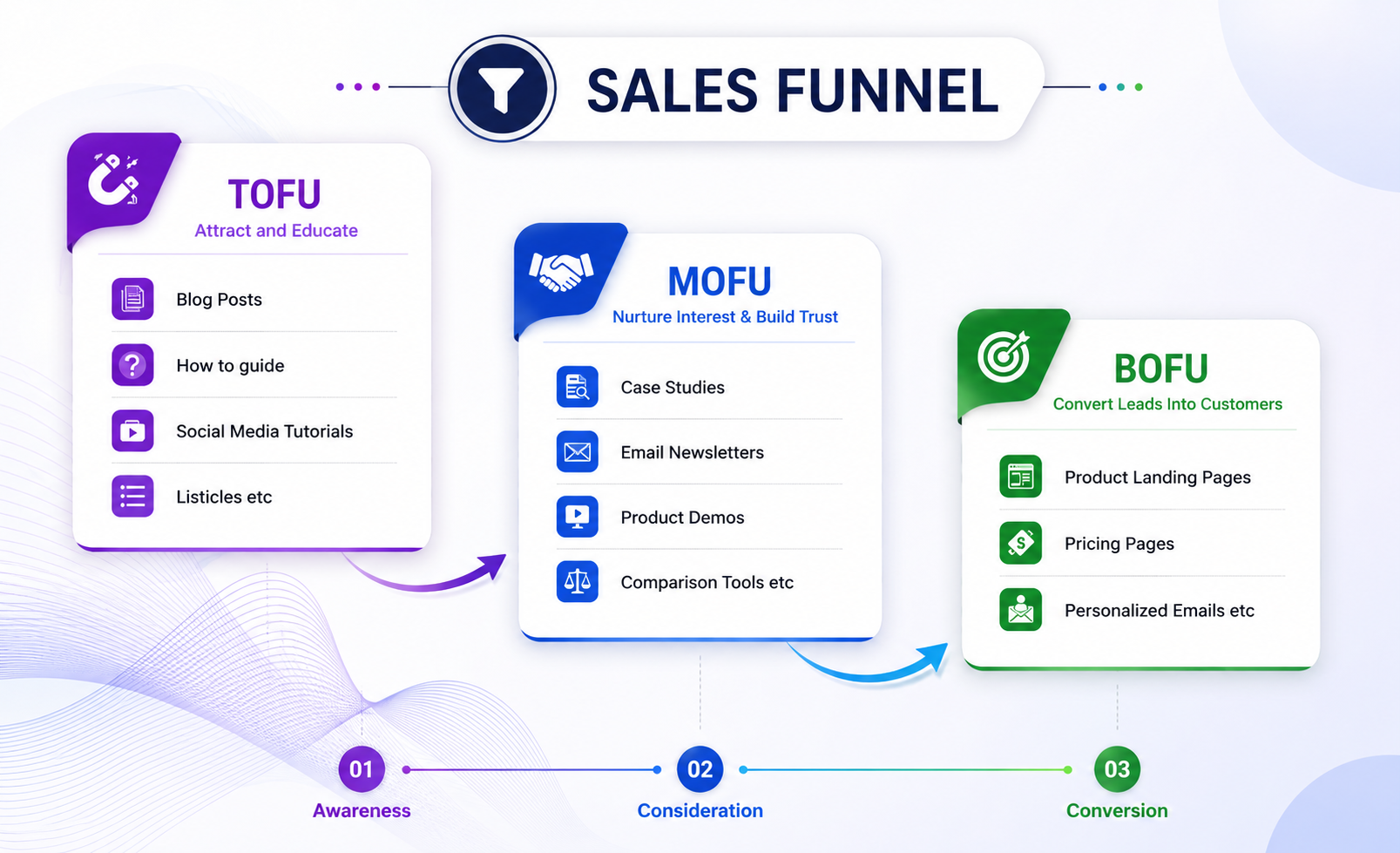
As a marketer and writer, you must know the differences between these search intents. The reason is simple: you cannot have your user bouncing to different websites to get what they are looking for. Enter: TOFU, BOFU, and MOFU
You might think these are some fancy version of a dish, but they are well-thought-out marketing pillars. TOFU, MOFU, and BOFU are actually part of an SEO strategy. They refer to different types of content you create based on what your user is searching for. This content can exist within the same blog, separate blogs, or even entirely different formats. But the core idea here is to satisfy the search intent under any circumstances.
Here is a quick overview to understand the same:
11 Advanced SEO Content Research Methods
Now that we have seen the importance of search intent and how the content funnel works, it’s time to dive into 11 advanced SEO content research methods that go beyond just competitor analysis.
Semantic Gap Analysis Using NLP Tools
Understanding the semantic gap is also about the search intent. It is a direct sneak peek into the extent to which your content is able to address your users’ queries.
The semantic gap analysis is not only about focusing on the keyword “pasta.” It’s about checking whether your content also covers related, more specific queries like “best pasta white sauce,” “quick pasta recipes,” or “how to make Alfredo sauce.”
How it works: With the help of your favorite NLP tool (Clearscope, MarketMuse, or Surfer SEO), you scan your competitors and other top-ranking websites to understand what you are missing for a given keyword.
Not only that, you get to figure out if you lack subtopics, questions, or important terms, and you can also refine it accordingly.
Entity-Based SEO Research
Entity-based research is not only about focusing on the product-specific keyword but also includes related concepts. So if yourwebsite talks about how to make the best pasta, you need to talk about the ingredients, tools, and techniques that search engines associate with “pasta.”
How it Works: Entity-based keyword research helps the search engines understand the full context of your article and helps push for better rankings.
So, instead of writing, Pasta is easy to make, and pasta is delicious to eat.
You write, "Making your favorite white sauce pasta is easy. At first, you need to boil your penne or fettuccine and keep it aside. In a separate pan, add garlic in olive oil, then stir in cream …" etc.
Topic Clustering for Topical Authority
Google needs to know if you are coming from a place of expertise or not. You cannot write on every other topic and expect to rank. This is why topic clustering is non-negotiable in today’s advanced SEO strategies.
Topic clustering is when you take all relevant topics about a particular keyword and write about all of them. You don’t just write one blog but multiple, each covering different angles or subtopics related to the main theme.
How it Works: If your website covers “how to make the best Pasta,” you also need to cover the topic cluster of all the topics that a user or search engine would expect.
So, if your pillar is how to make the best Pasta, you must cover:
- Different types of Pasta and when to use them
- How to Make White Sauce for Pasta
- 10 Common Pasta-Making Mistakes to Avoid
- Essential Kitchen Tools for Homemade Pasta and so on.
Predictive SEO Using Trends & Emerging Platforms
Predictive SEO trends is not only about following trends but arriving there before everyone else does. It’s writing on topics or keywords that have yet to be discussed in the written form of content, but have already started to create a buzz on social media.
A great example of this will be a celebrity sharing a unique pasta sauce recipe online with homemade ingredients. This will automatically make people search more about pasta, sauce, and homemade ingredients in general.
How it Works: Now, if you are someone who relies on predictive SEO tools, you can quickly hop on this trend and update or produce new content accordingly. This will give you the upper hand, and before others saturate the trend, you will already be a step ahead.
Content Personalization via First-Party Data
Relying on content personalization or first-party data can upgrade your content strategy in a few quick and easy steps. First-party data is the information that you gather from your users to figure out what they are looking for.
It is the data you collect directly from your users, like email sign-ups, site behavior, and in-site searches, and use it to understand what they are looking for. It’s a type of smart marketing hack to make sure your potential users never stop thinking about you.
How it Works: You use your CRM tools (HubSpot, Salesforce, or Zoho) to analyze your user demographics and behavior and look into their interests, past purchases, the pages they visit, how long they stay, and so on.
So when a user searches for "gluten-free pasta," you offer them strictly that so that they spend more time on your site. If a returning user reads a blog in detail, they can be sent newsletters for quick and easy pasta recipes, and so on.
Zero-Click SEO Optimization
Zero-Click SEO Optimization is a content strategy that provides users with all the necessary information directly on Google’s search page. You do not have to click on the link to know the answer to your query.
A perfect example of this is when you look up the weather or ask a specific question, like “how many calories are in a bowl of pasta,” and so on. The reason why this works is simple: you get to command search visibility and also create an instant impact.
Many people think it’s bad news if you give it all away on the featured snippets, People Also Ask boxes (PAAs), or image carousels themselves. But that’s not true since it helps not only with visibility but also with establishing credibility and probable voice search mentions.
Your content visibility on the SERP snippets also assures your readers that Google trusts your content. A brand recall of this regard only adds to your advantage in a competitive market like ours.
It also gives you a psychological advantage, especially in this present attention span crisis. If the readers like what they see, it's expected that they will open the link to read it further.
How it Works: The search snippet visibility is controlled by Google, but you can always make sure to do things the right way and get mentioned.
- Write clear answers in 40–60 words using bullet points, definitions, or tables.
- Summary boxes: Place TL;DR sections or “Quick Facts” at the top of your content.
- Use real questions people ask
- Implement structured data and so on.
Leverage AI Prompt Engineering for Research
This is where you leverage ChatGPT to have an upper hand. The idea of prompt engineering is using ChatGPT to understand how a potential user might perceive your site. Not only that, but it's also about checking for any existing leaks and fixing them for the better.
The easiest way to achieve this symmetry is to prompt ChatGPT to behave like your target audience. Along with that, you can also use it to identify the long-tail keywords, hyper-specific questions, or misspelled/odd phrasing. You can also paste existing blog posts, product pages, or brand guidelines into ChatGPT and assess the gaps in your existing content.
How it Works:
- You can prompt ChatGPT to act like your target audience, for example, “a cooking enthusiast looking for easy pasta recipes”. This will help you identify the various ways users search, the questions they will ask, and what kind of content they expect to see.
- Or you can go the easy way and work with ChatGPT, compare my article with the top 3 ranking pages for ‘easy pasta recipe’ and list missing subtopics.”
- The popular SEO tools tend to focus mostly on generic keywords. But most often, real users search in unexpected ways. Here is a quick example:
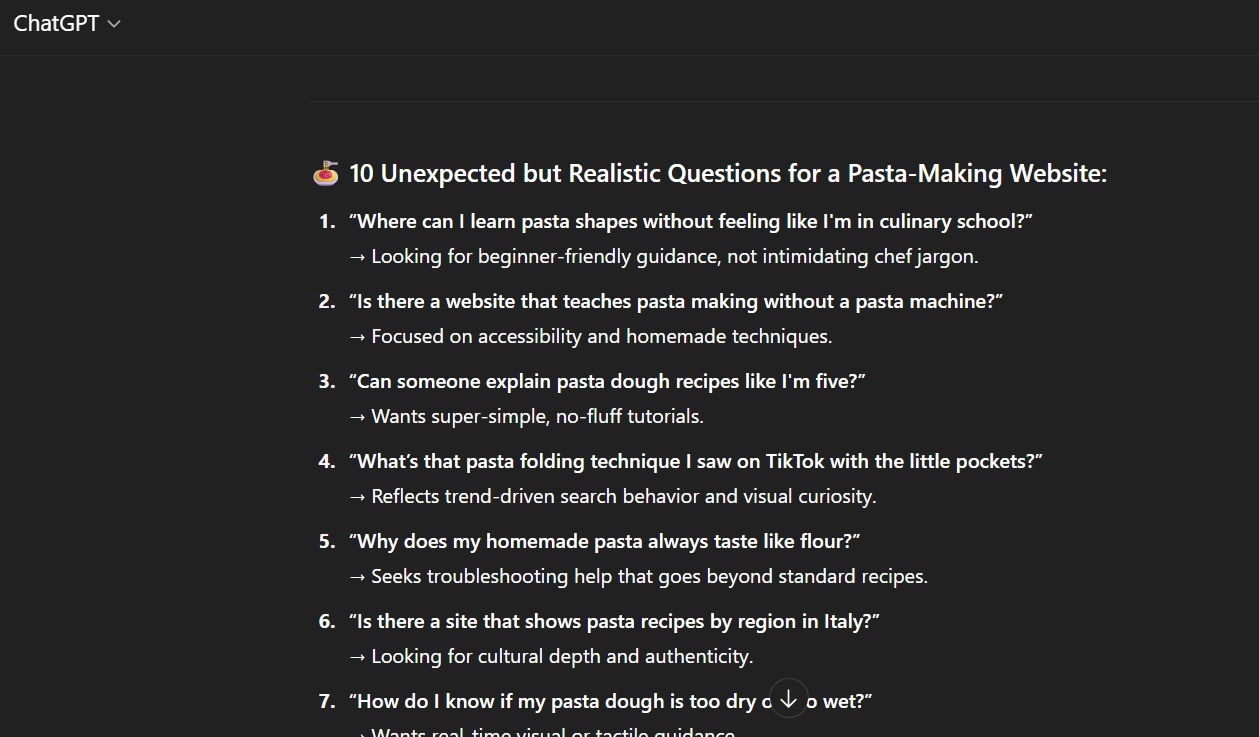
Needless to say, this helps you identify untapped content opportunities and cater to a wider audience.
- When ChatGPT learns your brand content's voice and tone, it can help you with research and writing suggestions that feel more aligned with the brand.
💡The best part about AI prompt engineering is that it works flawlessly with any form of content. Skeptical about how your landing page looks? Or unsure about how your followers will react to your captions? Well, AI prompt engineering has you covered.
Behavioral Heatmap Analysis for Content Clarity
Sometimes, knowing what your users are searching for is not enough. You also need to assess how they are reacting to your content. Are they spending enough time and reacting to it? Or, they are bouncing off quickly.
Being able to control your bounce rate is a critical strategy because it can directly trigger Google’s radar. If your users are abandoning your website the moment they land on it, you will be in trouble.
That’s why tools like Hotjar or Crazy Egg help you with the Heatmap of your website and help you in knowing which parts of your content users click, scroll past, or ignore entirely.
How it Works:
A setup like this makes sure you are never confused about what is working in your favor and what isn’t. Are people actually reading your entire piece? Is your CTA convincing enough, or are your users jumping through it?
Heatmap analysis is a great way of fixing the leaks. You can then implement the required changes, like adding visual cues or refining your tone to make it more human for better engagement.
Discover Unique Content Angles Using Crowd-Sourced Platforms
Doing PR but for your niche is one of the most important SEO strategies you can implement. This is going into reputed platforms like Facebook, Reddit, Quora or any other public forums and understanding the mood.
This helps you with the “why” behind the search intent. To put it in simpler terms, it gives you a quick insight into why there is a certain spike in the search for white sauce, etc.
A deep dive into crowdsourcing platforms provides unfiltered access to all the opinions of your potential and existing users. Moreover, it can even lead you to the exact shortfalls of the top-ranking websites, including yours, in these forums.
How it Works: You look for threads or posts that talk and discuss topics related to your products and can help you create content that resonates. For example, you can find that not many people know how to make easy homemade pasta, or there is a demand for gluten-free recipes.
This helps you to reshape or update your content accordingly and fill the gaps to appease the crowd. To put it in simpler terms, it's like having a quick survey to know what your potential and existing users want.
Content Audit + AI-Powered Gap Identification
In most cases, a website that has been live for a while usually has a list of content that underperforms. It can be due to the lack of updated facts or the overall structure in general.
That’s why Content Audit is one of the most crucial aspects of SEO. With tools like Screaming Frog, Sitebulb, or Ahrefs, you can scan your entire website for:
- Pages that offer thin content or shallow information,
- Posts with old data,
- Duplicate content (too many similar topics competing for the same keyword), and so on.
This helps you declutter your content ecosystem at a time when 90% of users are likely to switch to a competitor after experiencing a poor user experience.
Furthermore, it is important because it helps with your overall crawlability, indexability, and user experience, the major signals that help improve your ranking.
How it Works:
This is a cleaning ritual for your content ecosystem that lets you refine and upgrade your content efficiently. You don’t want your users to go through content that’s not updated or says the same thing in every blog or landing page.
But here’s where it gets even better: once your audit is done, you can use tools like ChatGPT to help identify content gaps further. As we discussed earlier, it can compare your content with what’s ranking right now and surface missing subtopics. Moreover, it helps you understand the user perspective better.
This way, your content ensures that everything that you upload to your site is valuable and offers something useful to your readers.
Content Velocity & Freshness Updates
You can create a content calendar, jotting down all the details of your old posts and the ones that you scheduled.
For example, you can focus on prioritizing pages that are already ranking but showing signs of decline, or those with outdated stats, broken links, or old examples. Relying on Google Search Console or GA4 can be of great help and help you figure out which pages are losing traffic or engagement over time.
You have to remember that it’s always about the small and meaningful changes, like:
- Adding newer statistics or examples
- Improving internal linking
- Refreshing title tags and meta descriptions
- Adding timestamped notes like “Updated July 2025,” and so on
Not only does it signal to Google that you maintain your content, but when users see current, relevant info, they are more likely to trust it.
How it Works
A great SEO strategy doesn’t only focus on ranking but also on staying relevant over time. It takes care of not only how you write your content, but also the content velocity (how often you publish or update) and content freshness (how timely and relevant your pages are).
If you are regularly updating your content, whether monthly or quarterly, it helps both the search engine and users understand that your site is active. It helps in convincing them that you can provide information on the latest trends. Moreover, the revisions help boost credibility and assure Google that you care about what you put out there.
Besides, when you publish new blogs weekly or update existing pages monthly or quarterly, the rhythm matters, making sure that you stay relevant.
Final Thoughts: Why SEO Today Is More Than Just Keywords
Our SEO strategy has now evolved way beyond keywords. We no longer rely on “best tools for 2025” and hope for the best.
It is now about aligning our content with search intent and making sure we give users exactly what they are looking for. The methods we covered go far beyond competitor analysis and basic keyword stuffing.
Whether you’re using AI tools to simulate real search journeys, analyzing heatmaps to fix content leaks, or discovering untapped angles from crowdsourced platforms, advanced SEO today has evolved. It is not only about data but also psychology and a lot of quick, smart work.
As a marketer or writer, all you need to ask before hitting that publish button is whether your content can truly solve a real user need and offer more than what’s already ranking. That clarity will put everything in perspective.