
Let us be honest, at one point, we all thought that an ideal paragraph needs to have at least five sentences. It is one of those things that we somehow knew and worked our way through. But then we grew up, read novels, blogs, papers, and realized, well, there goes our fact!
Here is the thing: as we debate how many sentences are in a paragraph, we never consider the most critical aspect. It is never about the number of sentences, but the idea itself.
Read along as we break this up for you to understand how to write the perfect paragraph for your next assignment. Do not worry, it will not be a list of technical rules that seem daunting. We will discuss it with some real-life examples and maybe learn a hack or two as well!😉
But First, What Is a Paragraph, Really?
Everything that you have read so far in your life, up until this blog, was a paragraph. You know, when you make the final point in your paper, or you tell your users why your product is the best? All of those were paragraphs. In simpler terms, a paragraph is a number of sentences or a sentence conveying one single idea.
- Sometimes you need a number of sentences to complete your idea.
- At times, one line does it.
✅ The moment that idea changes in your blog, paper, thesis, Instagram post, or whatever writing structure, the paragraph also changes.
Here is a quick example from one of the blogs that we wrote last year:
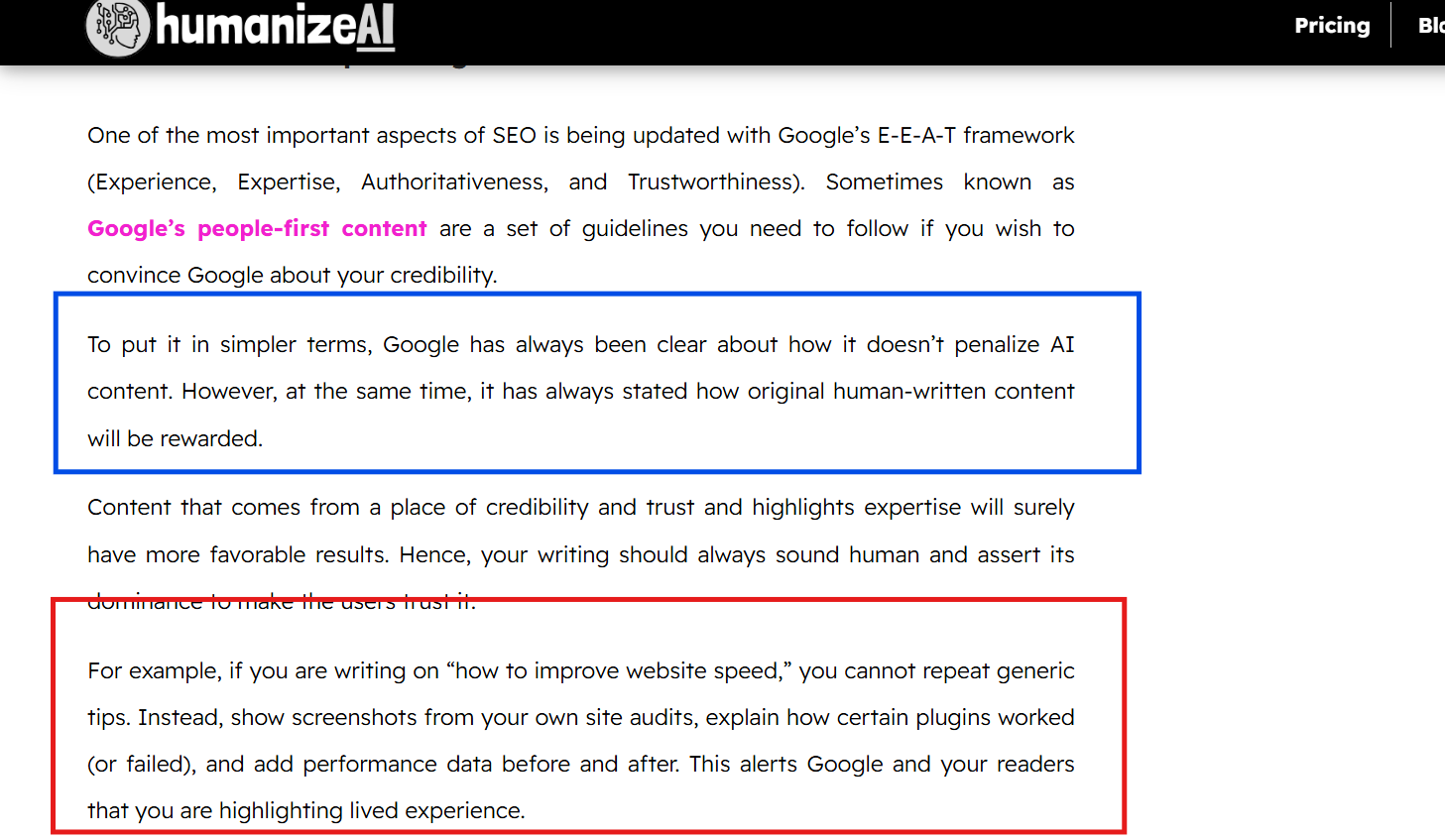
As you can see, the gradual change in the paragraphs only happens when the idea changes. (One talks about Google’s perspective, and the other discusses an example.)
So… How Many Sentences Does A Paragraph Have?
Before we reveal the big secret, here is another example for you:
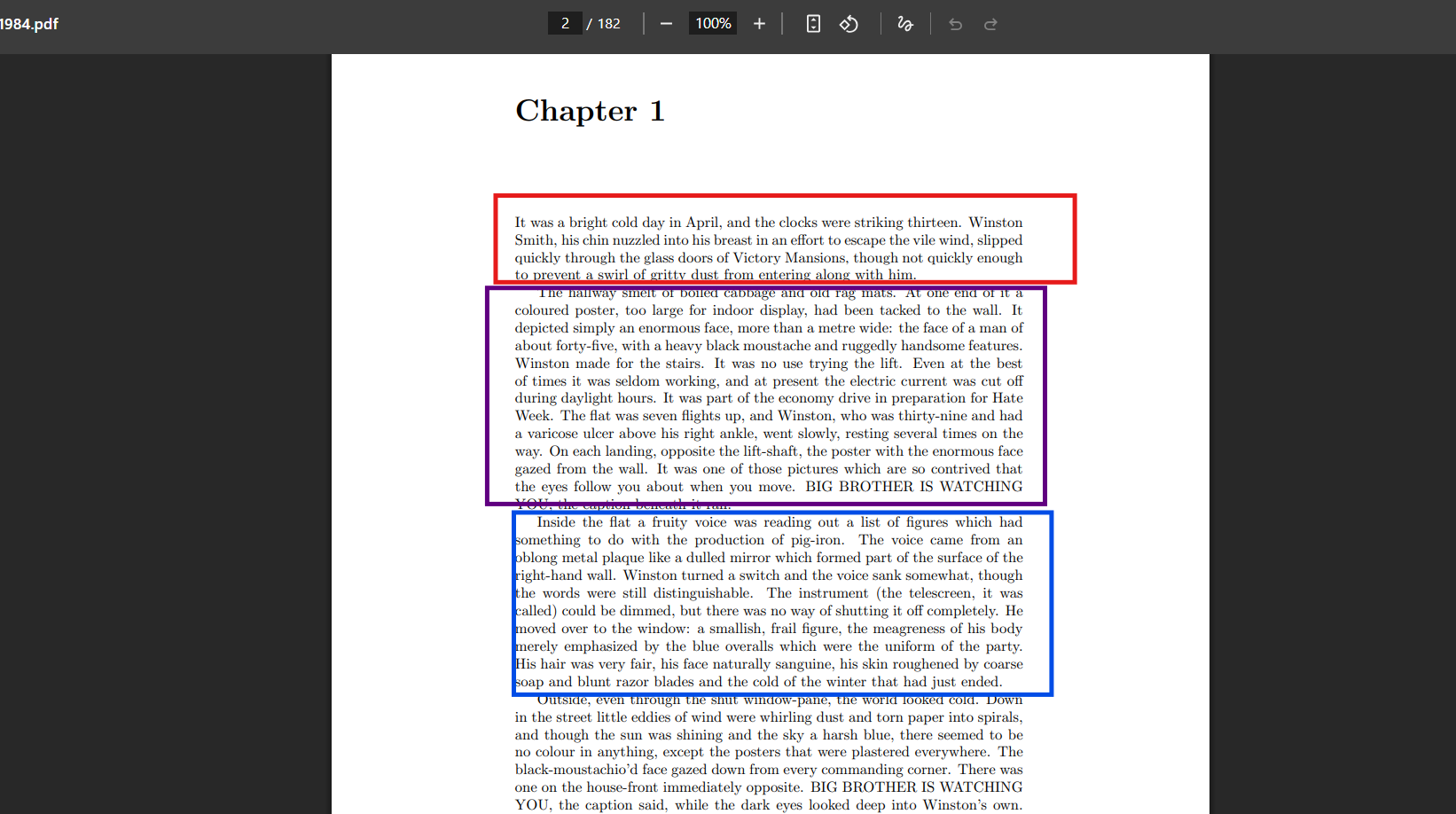
This is a snippet from the famous novel 1984, written by George Orwell. As you can see, each paragraph is not only of varied lines, but they also transition into a different idea or storytelling as well.
Be it a blog written by us keeping in mind the modern SEO techniques or a cult classic, the rule of paragraphs remains the same! There is no rule.
➡️Your paragraphs can have five sentences, sometimes eight, and sometimes even just one; it doesn’t matter! In fact, the sentence count in a paragraph is simply a side check that you need to keep in mind, maybe for submission formalities. Otherwise, it is just a good to know information and nothing else!
In simpler terms, the number of sentences in a paragraph depends solely on you the writer and how you wish to present their ideas, research, observation, etc.
How to Write A Paragraph?
As I promised in the beginning, we will settle this with some real-life examples. It is time to quickly analyze what exactly a paragraph is. Now, you have been doing it ever since you wrote your first sentence in your life. But let us revisit it as a concept one more time.
Imagine that you have been asked to write two paragraphs on Google’s AI Overview. This is how you should break it down:
Determine the idea or the purpose of the paragraph
In this case, you are talking about how Google’s Overview is changing the way we search. That’s it. Not how it works, not whether it’s good or bad, not SEO strategies.
Just one idea. You don’t explain all at once, nor do you overcompensate.
Write the First Sentence (The Anchor Sentence)
This is where you set the stage for your whole paragraph. Think about it as a quick glimpse of what you are going to talk about for this given paragraph.
Example:
Google’s AI Overview is now changing how we search.
At this point, this sentence can stand alone as a paragraph. But at the same time, it does feel unfinished. The reader will naturally ask: How? Why?
Add Supporting Sentences
This is where you elaborate on your ideas and tell your readers what is going on. You can either stop at 3 or go up to 10; that is up to you. But you must remember the two basics:
- Do not add random sentences that are not connected to the idea just to reach 5.
- A good paragraph ends when the reader understands, and not when some non-existent ideal word count is met.
Stop When the Idea Feels Complete
We are not talking about SEO implications, traffic, change in our writing style and so on with this paragraph. Our idea was to simply introduce the change and not its repercussions. The moment you understand this basic difference, you figure it all out.
➡️This is how it is supposed to look once you put things into perspective:
“Google’s AI Overview is now changing how we search. Our potential users are no longer clicking on the blue links. Instead, they are getting all the information they want with the quick AI-generated summary on the first page itself. It is now fast, efficient, and more elaborate with next to no effort.”
Now, the next paragraph is when you elaborate on its impact on the business, the loss of traffic, and so on. As we have discussed:
✅Here, as discussed, we only answered the basic idea of what has changed and didn't divert to make up for an ideal sentence count.
✅ One more important thing, it doesn’t leave the users hanging on who or how.
Can a Paragraph Be One Sentence?
Yes, absolutely, a paragraph can have one sentence and still convey what it is supposed to. The weight of the decision, honestly, is solely on you. You decide whether to fixate on a number or go with the writing flow. There will be no one telling you, “Hey, you cannot do this, add more lines.”
As you try to understand if you can add a one-sentence paragraph, there is one thing that you must remember. Writers use one one-sentence paragraph only for a smooth transition or a dramatic effect. In other words, summing up an entire concept in one line feels rushed, shallow and honestly lack of effort and research.
Simply put, no one can stop you from writing a one-sentence paragraph, but it might not come as handy as you think. Just remember that clarity matters more than anything else.
If the idea feels finished, the paragraph works. If it leaves the reader asking obvious questions, it needs more!
When Does A Paragraph Feel “Wrong” (Even With Perfect Grammar)
Sometimes you think you have figured it all out, only to realize you need to do it all over again. This is what happens when you focus only on the grammar aspect of your paragraphs. Your entire work might skip making sense and feel “wrong” if you:
❌ It is too short to mean anything: Even though you get full marks in grammar, if your paragraph doesn’t complete a thought or idea, it is of no use. One sentence with no support makes it difficult for the readers.
❌ Too Long to Stay Focused: You put in multiple concepts in one place, start explaining each of them, and bombard your users with information. This is where it feels like a formatting error to your users more than anything else. Moreover, your readers eventually forget the point halfway through.
❌ Sentences That Don’t Belong Together: Think about it this way, would you talk about AI detectors when talking about AI overviews? Most likely not in the same paragraph. Why? Because they are different concepts and have no direct relation with one another.
The moment you keep these basics in mind, you will realize that it is technically the easiest thing ever. But if you feel like you still need something more as promised, here are a few quick hacks:
- You can always rely on HumanizeAI.io and its bunch of writing tools to do it for you. Simply copy and paste your content and see how our tool refines the edges of your paragraphs. Write like you always intended to, with speed, efficiency, and in your own voice.
- Or remember this one simple Flow Chart: One idea ---> Clear start ---> Explaining the idea (Regardless of a set number of sentence count) ---> Clean stop
Some Paragraph Mistakes Writers Make
By now, you may have figured out what can go wrong when you write a paragraph. To put it in one simple line, the moment you start chasing an imaginary count, things start to crumble. You need to think beyond the number and focus simply on the idea you are working on.
- Mixing the ideas only to reach a desired sentence count.
- Thinking correct grammar is equal to perfect writing.
- Abruptly ending the paragraph without concluding the base idea.
- Approaching it with some said number or limit in mind instead of working and elaborating the idea.
- Not breaking the paragraph even when the focus changes.
So, How Many Sentences Are in a Paragraph, Really?
Now, to sum it all up, the only takeaway you need from this blog is that there is no “right” number of sentences for your paragraph. It all depends on how you approach the idea and make it easier for your readers to understand.
You want a one-sentence paragraph for a transition? Perfect! You need 5–8 sentences to elaborate on the idea? Go ahead. It is your writing, your work, and most importantly, your creative decision.
It is as simple as it can get. As a writer, all you have to keep in mind is that your readers should always have their answers. When you are putting an idea in their head, make sure you also give them closure; otherwise, it is just noise and confusion.
In simple terms, you only move on to the new paragraph after the one in hand is done. That is it! This is the only secret you need to know, and everything else will always fall in place!