
As a marketer, you might have found yourself wondering how often should you blog every time you try to plan your content. It has reached a point where having an answer to this question feels like it will solve half of your content worries.
Even though Google is helpful with its insights on how to make the best use of your SEO strategies or leverage AI while following E-E-A-T guidelines. It has always been silent about the ideal number of blogs for a marketer to target.
See, here is the truth. It will never restrict you with a number. No search engine wants websites to stop posting. It will then defy its very purpose.
However, this is also where things get tricky. The responsibility then eventually falls on us marketers, writers, or creators to figure out what works best.
But it's not that Google is completely indifferent about our worries.
It has dropped certain hints time and again to help us understand how often we should post. This blog picks up all those hints and will help you figure out an ideal posting frequency. Read along to find out more.
Why Blogging Frequency Matters
To understand why everyone is so fixated on knowing the ideal number for a blog post, one needs to dive deep into the fundamentals.
People tend to think that the importance attached to the frequency of a blog post is proportional to a higher rank in the search results. With Google pushing for the freshness of the content, things have become trickier.
But Google has never been upfront about an ideal number. All it has been telling us is it prefers updated and factually correct content.
If you think about it, at the end of the day, even Google has a reputation to maintain. It will never want to push content that gives out incorrect or obsolete information.
So if you have a blog that was written ages ago, you either need to update it. Or just simply delete it. But one way or another, irrelevant or outdated information needs to go.
Here are quick snippets from Google itself, asserting how it will always push for content that’s fresh out of the oven.
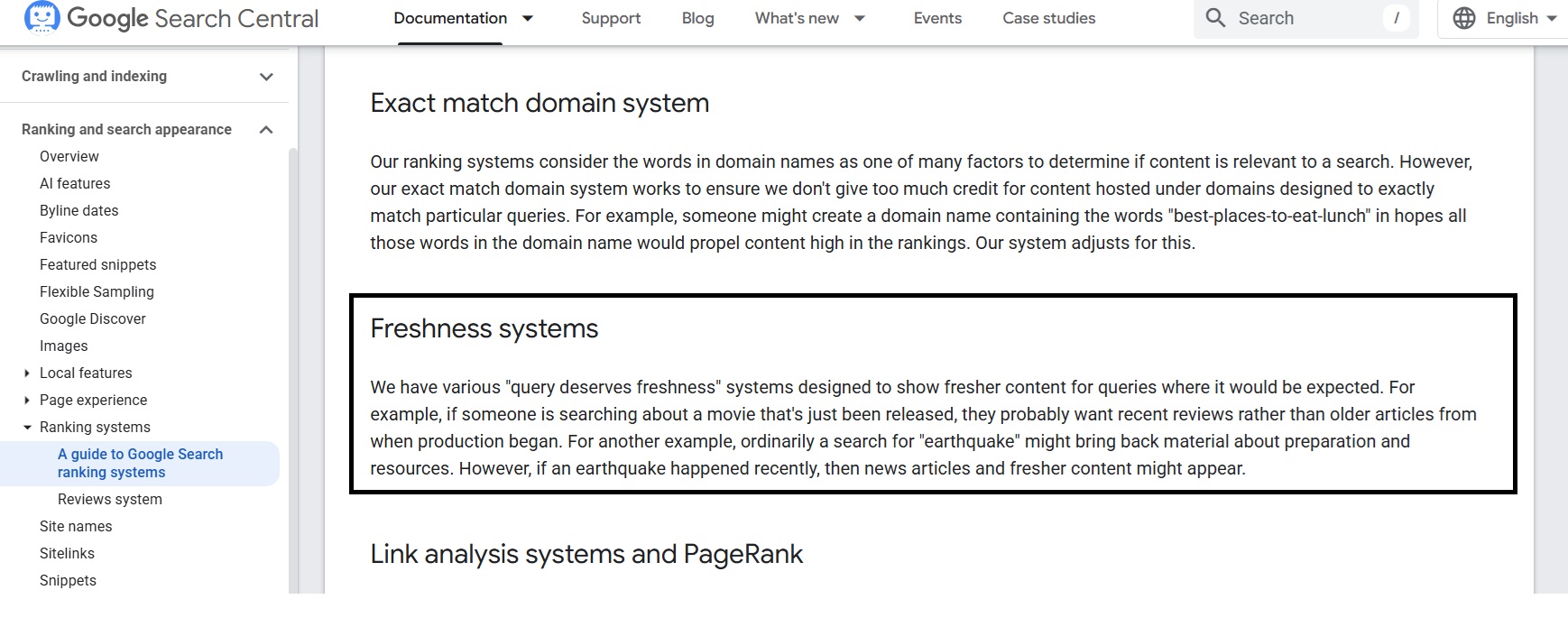
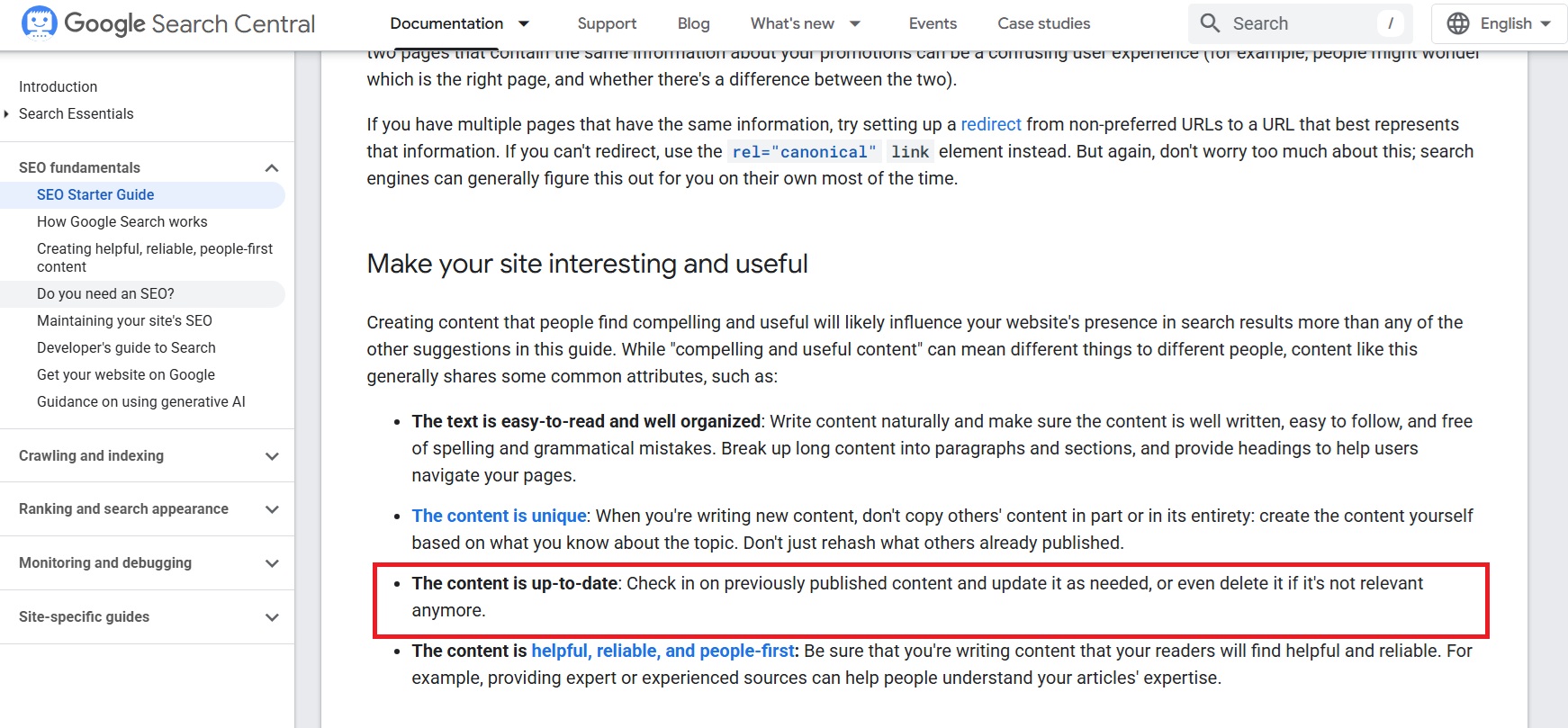
Hence, simply put, if your content doesn't answer or address the user’s query with the updated result, Google won’t be interested.
This is where the business feels pressurized, and the concern about the number of blogs comes into play. They keep on wondering if they need to go back and fix things or keep producing content in general.
However, the best part in all this is that you don’t have to sacrifice one for the other. Your business goals will never clash with blogging frequency, as they are independent of each other.
I understand it's a confusing situation to be in. Google rewards expertise, but it also needs freshly brewed content. It only makes us wonder if pushing the numbers is the only way to go through this.
But we need to realize that expertise and freshness of the content are different, which may or may not be affected by the frequency of the posts.
How to Align Blogging Frequency with Business Goals
The purpose of content is simple: organic traffic and conversion. Now, as per Google’s helpful content update, your content needs to come from a place of expertise and authority, along with other things.
In short, you must convince Google you know what you are talking about, and you are a credible source. This doesn’t happen overnight. It can take months of consistently posting high-quality content to build what Google calls E-E-A-T, which stands for Experience, Expertise, Authoritativeness, and Trustworthiness.
Or the signals that convince Google that your content needs to be pushed to its readers. But there is another layer to this setup, known as the site reputation abuse.
If you have a high-ranking website, and you have already convinced Google you are a credible source, it still doesn’t mean you have a free pass. This is what happened with Forbes when it didn’t stick to a particular niche and started writing about every other topic.
Forbes saw a significant decline in traffic as Google had restricted its organic search traffic and reduced its visibility in the search results.
But that doesn’t mean you can get away with publishing one post and just updating it occasionally. You also need to maintain your content momentum and convince Google that you are active, reliable, and invested in providing value.
The Role of Content Quality in Blog Frequency
You will find a bunch of numbers floating on the internet as the ideal blog frequency. Having a number in mind surely helps set your content strategy in motion, but it can also derail you.
The ideal blog frequency is dependent on the nature of your website. If you are new to the industry, you have to post frequently to establish authority. But if you are a veteran with authority, you can be more flexible about it. But in both cases, you have to convince Google that you add value for its readers.
There is a high chance that you can post two blogs a day and still see zero results if your content is not original or fact-checked. Therefore, with Google, it's always content quality topping the blog frequency.
| Focus Area | Results |
| High Frequency + Low Quality | ❌ High bounce rates, poor rankings, wasted effort |
| Moderate Frequency + High Quality | ✅ Better engagement, trust, and higher search visibility |
What Quality Means to Google
Google doesn't beat around the bush with its quality standards. Apart from its focus on the E-E-A-T principles, or the four trust factors that decide the fate of your content. It also urges the users to make their site useful. Which means if Google is pushing organic traffic your way, you need to keep up with its reputation. You must provide the readers with everything that they want, along with a satisfying browsing experience.
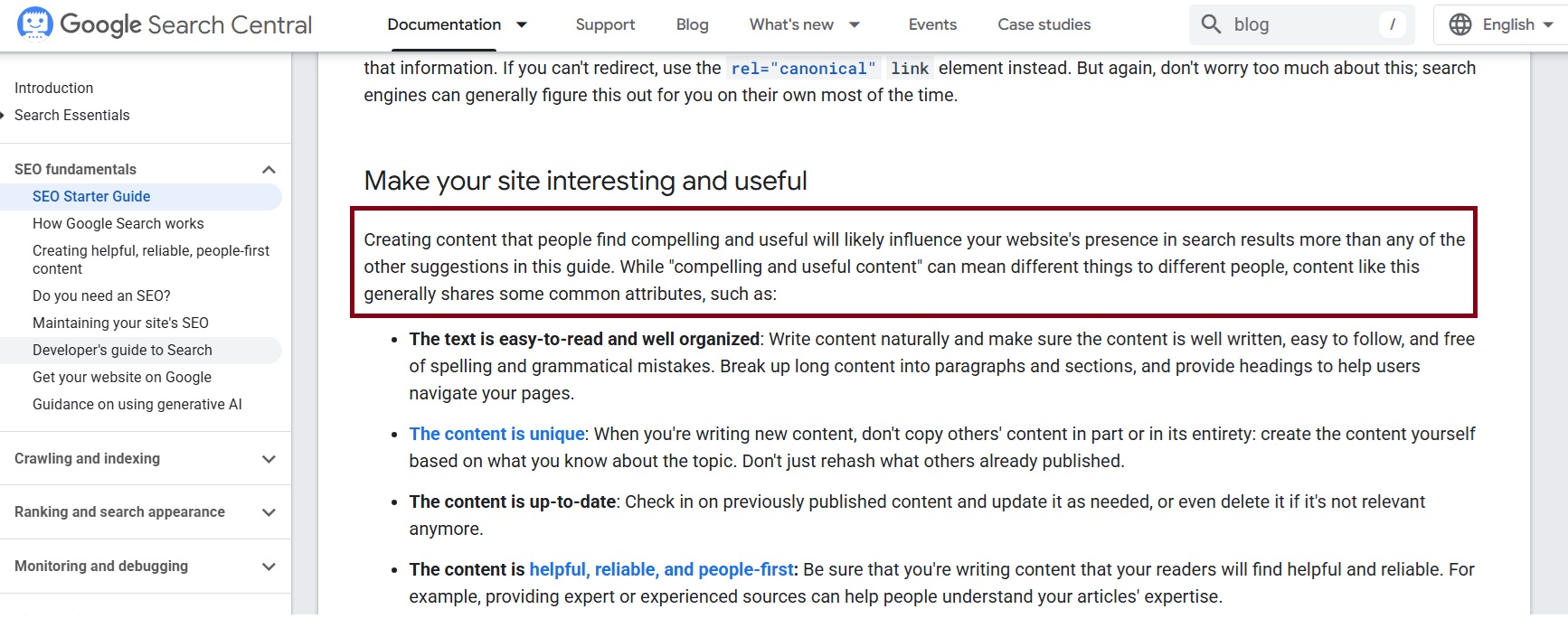
Here is a quick bullet point of the same:
- Experience: Your content should be written by someone who has firsthand experience of what they are talking about or someone who has tried the product.
- Expertise: They need to have proper training or expertise to talk about the given product.
So, when you write about the best healthy ways to fast for weight loss, the advice needs to come from a nutritionist for it to rank. You can either quote them or cite your sources before hitting that publish button.
- Authoritativeness: Your brand needs to convince Google over time that you are the go-to source for any kind of dieting source through backlinks, mentions, and so on.
- Trustworthiness: Your content should be accurate, honest, and transparent, backed by credible sources on a secure professional website.
Along with the E-E-A-T guidelines, you must remember that your content should be
- Well-organized, easy to read, and free of grammatical errors.
- Most importantly, it must be helpful, reliable, and written with the reader in mind and not for the search engines.
Should You Update Old Blogs or Publish New Ones?
This is the only question you should be asking instead of looking for that ideal number. The dilemma is not about how many times you should post in a day or a week. But it's about understanding Google’s perspective on what it wants from you.
It needs you to be a source that its users can trust. Think about how you recommend your favorite restaurant to a friend because you know it won’t let them down. It's the same for Google. It needs to make sure that you can offer everything that its users require.
So you have to maintain a balanced approach for your content. Along with posting new content, you have to prevent content decay.
💡Quick Fact: Content decay is when your post’s performance declines over time. It could be due to a change in the facts you presented, or your competitor has published better content on the same topic, and so on.
Therefore, having a balanced approach where you audit your content depending on how dynamic your industry is the only way forward. For example, if you run a fashion website, you will have to keep up with the latest trends, or you won’t see the numbers.
There can also be situations where rewriting old content can feel like reinventing the wheel. So, in a situation like that, creating a new blog is always the right answer. To put it in simpler terms, you have to be a better judge of the situation rather than just blindly trusting the numbers or a stringent audit plan.
How to Build a Sustainable Blogging Schedule
No matter what industry you cater to, having a blogging schedule can ease the load off your shoulders. But before you start updating all your existing content at one go, you need to slow down! Think about what your goals are before you start exhausting your resources.
To begin with, at no point should you ever be that brand that is known to only write for SEO trends.
You have to divide your time for content creation and content maintenance and proceed accordingly.
Your blog schedule should support your larger marketing and sales funnel. Here’s how to keep it aligned:
- TOFU (Top of Funnel): Informing the users what your content is about. (e.g, “How to make a healthy breakfast)
- MOFU (Middle of Funnel): The type of content where you solve a pain point of your user. (e.g., “Bread vs. Cornflakes: Which Is Better?”)
- BOFU (Bottom of Funnel): Content that influences your users to purchase, testimonials, product updates, or use cases. (e.g., “Why Our 5-Min Breakfast Kits Are Perfect for Busy Mornings”)
Hence, your ideal content strategy is a mix of the various layers of the sales funnel that not only attracts users but also engages and converts as well. It is also about updating your existing content rather than just focusing on the numbers.
Pro Tips for Long-Term Consistency
✅ You cannot come up with a content idea on the go and write a blog post on it. You have to make sure that you do your research a week prior to analyze the ongoing trends.
✅ It would be great if you could set a certain date or time when you publish content so that your users know when they need to drop by. But it is also necessary for you to acknowledge that consistency doesn't mean overdoing it beyond your available resources.
✅ You can always rely on AI tools to make this entire process easier by helping you research your content ideas or repurposing old content. Even if you plan to rely on ChatGPT to write a piece for you, do not forget to refine it with Humanize AI.
Even though Google doesn't restrict AI-generated content, it prefers content that sounds human to an instruction manual.
Final Thoughts: Blog with Purpose, Not Pressure
To sum it all up, you don't have to chase a certain number of blogs to get noticed by Google. You can post every day and still not rank if you do not add value to the content space.
Moreover, increasing the number of blogs won’t impress Google if you rely on outdated posts that haven't been updated in months. What truly matters is relevance, originality, and consistency. Your blog needs to show that you are active, adding value, and genuinely trying to help your audience.
The idea is to focus on a schedule you can keep up with as you build a space that keeps its users as its top priority and Google as just a medium to reach them.