
We, as marketers and writers, sometimes feel like that one student who has a doubt just before the final exam. When it comes to writing for Google, we still don’t know which is the right approach. Google has laid out its rules and structures for the new AI Overview, advising us on many aspects through its blogs.
But it hasn’t addressed that one question we all want to know more about. Short vs. Long Content in AI Overviews: Which works more? Should we write a 3000-word blog, opt for micro answers, or simply let things as they are for the inflow?
Read along as we understand what is happening and help you frame your content strategy better. Consider this your personal brainstorming session as we go beyond the generic information and establish what exactly Google wants. But before that, back to basics!
What AI Overviews Actually Look For?
We have all seen how Google’s AI Overview is known to cite content even with next to no authority. But that doesn’t mean experience, expertise, or trust have stopped mattering. These remain core pillars in Google’s evaluation system. Just as important as accurately matching the user’s search intent.
So what does it mean for you and me?
Firstly, we need to understand two things:
- If every blog on the internet is 5000 words, we will only have long-form content, and that is what will be cited. Since that is what “fresh content” will look like for Google.
- Secondly, we have to go beyond our traditional SEO knowledge to accommodate search intent from now on.
Here’s a quick breakdown:
- We need to be to the point with our answers, give the users exactly what they need in simple, more human, and clearer tones. All the fluff about word count, keywords, and other arbitrary SEO hacks needs to die down.
- Short content helps AI find the answer, but long content helps AI trust the answer. But not in a way you think.
It is mainly about going beyond this debate and understanding that Google only prefers relevance, context, and clear answers that do the job! Let us break it down for you from the horse’s mouth itself.
The False Debate—Short vs. Long Content
I am sure by now you must have read a thousand LinkedIn posts, SEO opinions, and whatnot that keep telling you everything you are doing is wrong. This is where you begin, as you shut down all the relevant noise and understand what exactly is happening.
To begin with, you must understand that writing long content doesn't mean you get instant authority. Think about it this way: what will your user do with a 3000-word guidebook when they are just here to know about your product? All your hard work is just a Ctrl+F, and that is it!’
It is mostly based on one simple logic; most writers confuse length with usefulness. Google doesn’t. As Google itself points out in its blog, it simply wants content that actually helps people. Real, original, useful stuff, not the generic noise everyone copy-pastes. If your content answers real questions and adds real value, you will show up in AI Overviews and in the regular search results as well.
In short, Google rewards two things:
- Clear Content
- Complete Content
In simpler terms, the AI snippet that you see is only to answer the user’s query, but your entire content is what convinced Google to cite it. Similarly, if the rest of your page doesn’t prove you have an upper hand on the topic, or you don’t provide additional insights, or your structure is messy, or your answer is incomplete, Google simply won’t pick you.
Similarly, if all you write is long-form essays, Google may see “depth” but fail to find the actual extractable answer it needs for an overview snapshot.
Hence, this entire short vs. long argument is a false debate.
AI Overviews don’t care about whether your article is 200 words or 2,000 words; all they care about is how relevant and accurate you are. Secondly, if you are trustworthy and insightful enough to be presented to the readers. So, as a writer or marketer, your plan of action is simple:
- Craft a direct answer that AI can actually cite.
- A layer of trustworthiness to convince Google that you are not superficial.
You have to remember that Google isn’t timing how long your article is. It is evaluating how helpful, structured, and trustworthy your content appears. You will be able to understand this better once you look into two real-life examples of our present content scenario.
What Google Actually Chooses: Two Real Examples
Let us understand this with two real-life examples so that you know what the set expectations are. Discussing and deciding the length of your content can be an organized way to start your work, but it is never the ideal benchmark. Here is why:
Case 1: Here’s a quick search I did for a random skincare topic, and the first link cited by AI Overviews is from a website with a domain authority of 18.
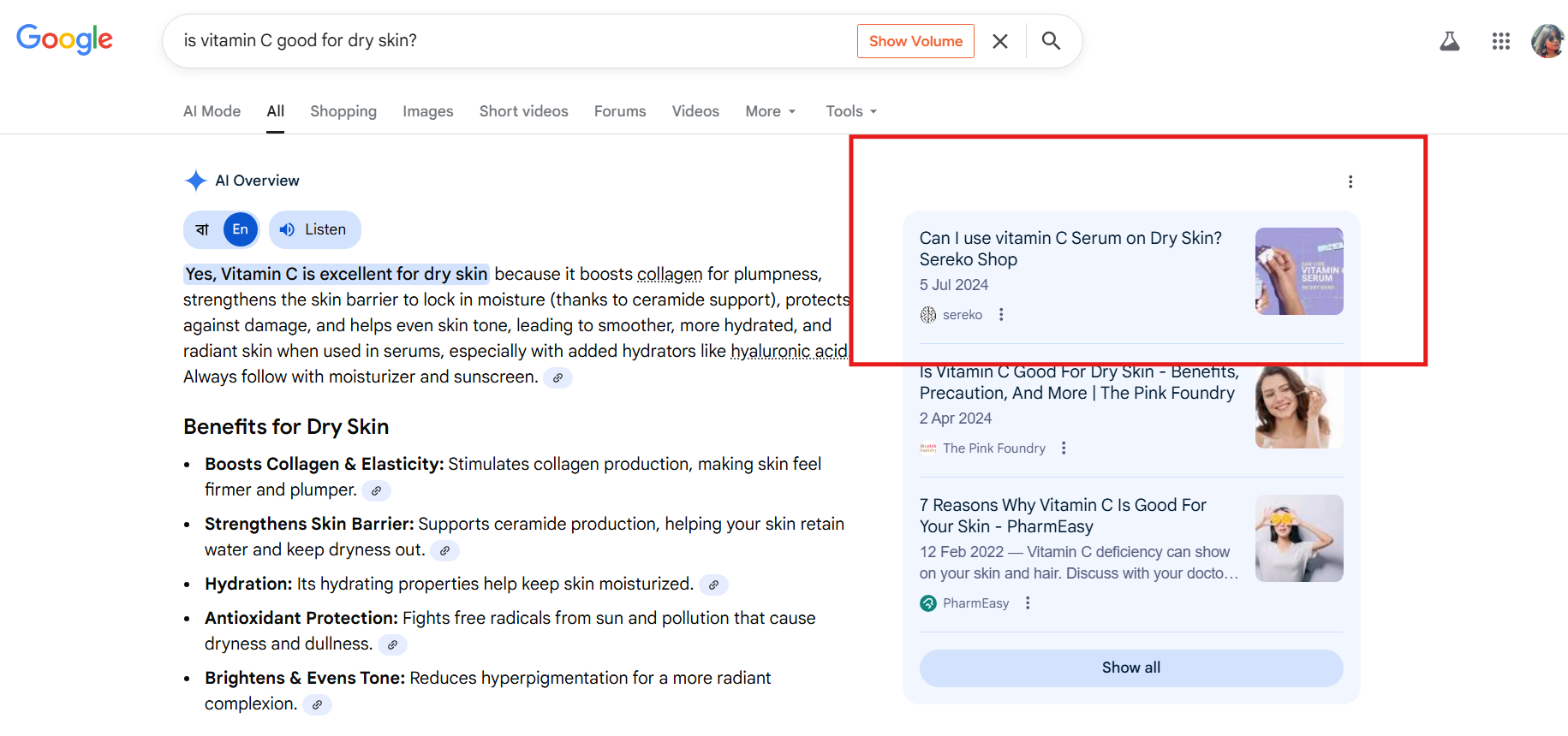
Here are a few quick things that you need to note:
✅ This blog is only 538 words, from a live website that sells and knows about skincare and skincare products.
✅ The real human reviews and genuine comments make a case for its expertise and trustworthiness.
Case 2: Another random search for one of the most common topics. AI Overviews cites a brand with a decent authority of 50 and is well-known all over the content space.
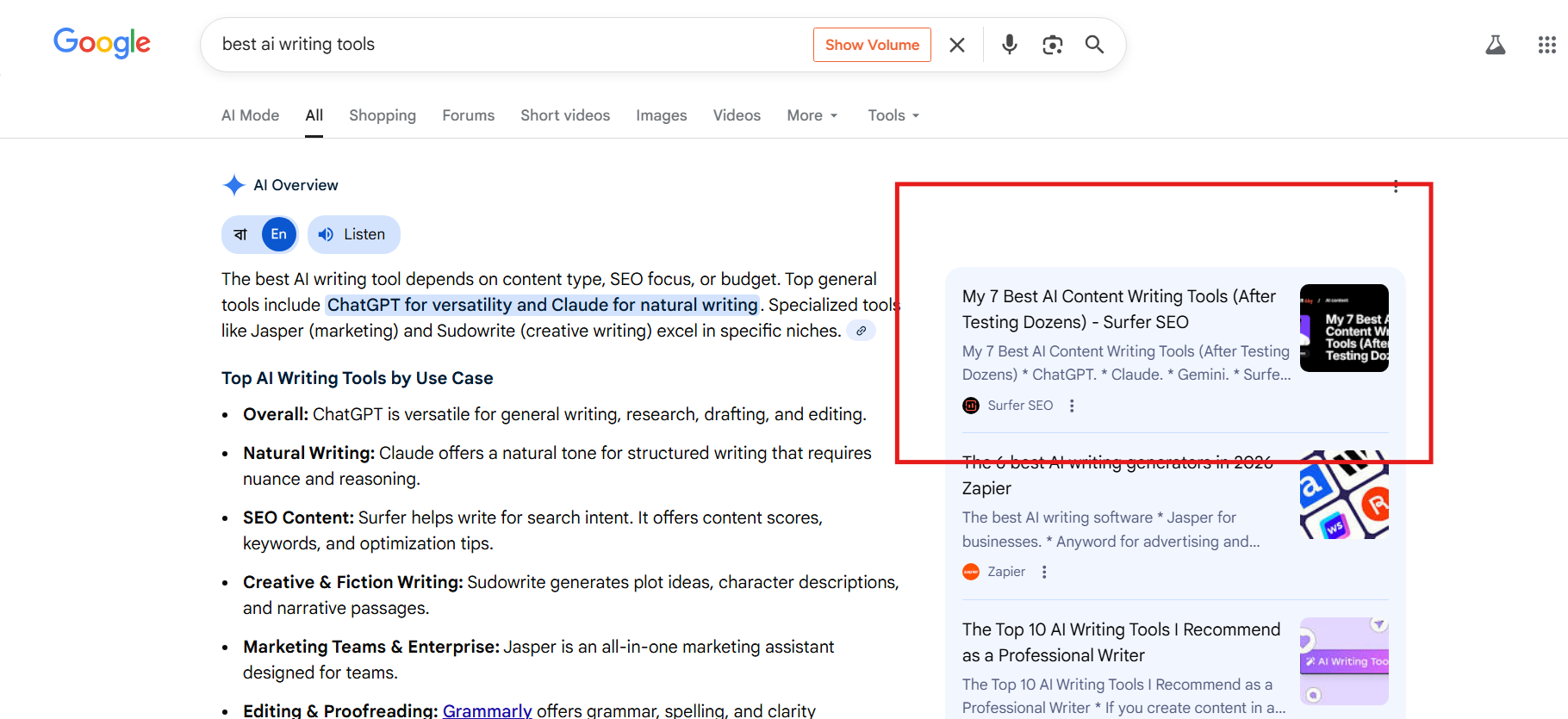
Things that you need to note here:
- Surfer SEO is already an established name in the market with a decent domain authority of 50.
- The blog that is being cited by AI for this query is of 2,842 words.
In short, our short vs. long form debate fizzles out here. We have seen a website with nothing but some genuine reviews and obviously insightful content, impressing AI. On the other hand, we also have a big brand with a decent domain authority showing up in the overviews.
So What Should You Do? (The Real Strategy That Actually Works)
You now know that it is not about the length of your content or the authority of your website. Google’s AI Overview only cares about one thing, which is trustworthy content that genuinely answers the query. Therefore, your strategy should be built around this concept and not second-guess the ideal length each time you write.
Relevance
Your ultimate savior in confusing times like this. Your content should actually talk about the answer instead of beating around the bush. You think your users will bounce the moment they get their answer, but so will AI if you are not to the point.
If you read the blog by Sereko, you will see that they have given the answer in the first paragraph itself. That yes, people with dry skin can use vitamin C, and the rest, as you know it, is history.
Clarity
By clarity, we mean a content that helps AI understand what you are talking about. You dont need drama or a build up, but a simple conversation with the readers gets the job done.
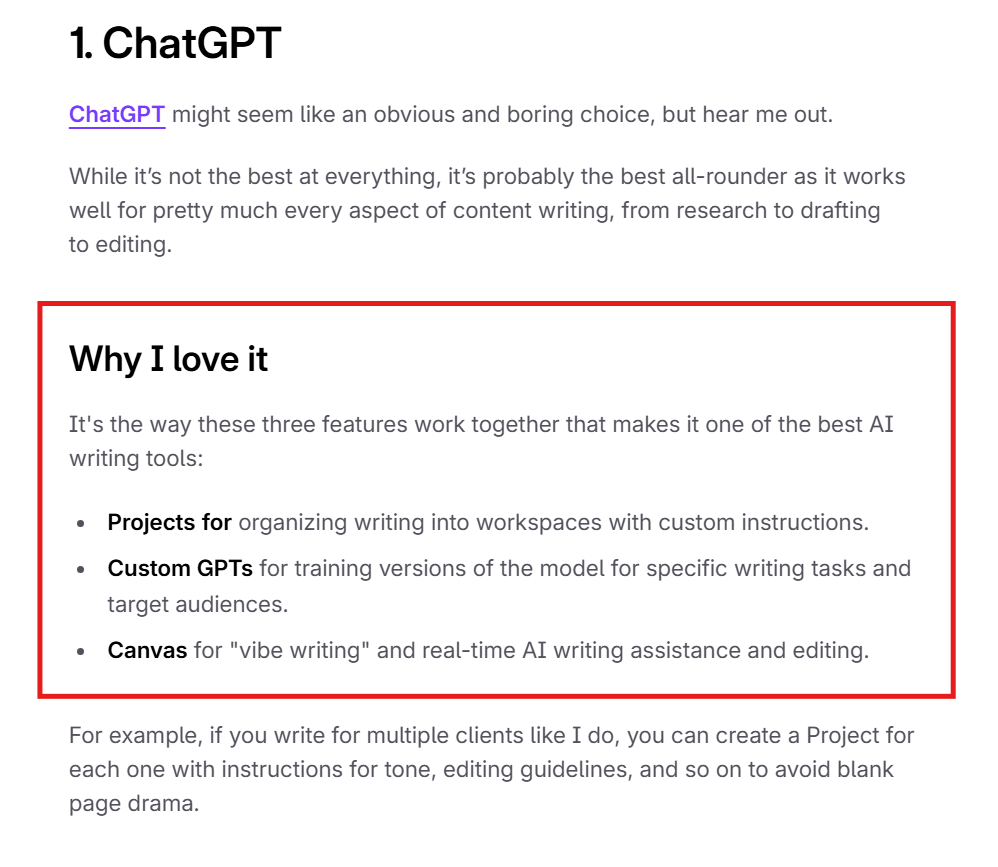
It is more about making your content AI-readable and, in turn, helping your users to understand what you are saying easily. And, it is not only hearsay. If you look at the blog by Surfer SEO that was cited by AI, it exactly follows the same pattern.
Depth
It is somewhat the same as visiting a doctor. You will always check for their credentials and experience before you even book an appointment. Google is exactly like this when it comes to scanning content.
It will look for depth, or if you have covered everything that your user might look for next in your work. It has moved past how much you should write or what the ideal word limit you should adhere to.
How to Structure Your Content for AI Overviews
Now that we have moved past the obvious debate, let us discuss what it means for you as a writer or marketer to write for AI Overviews. Once you are well aware of the structure of your content, you don’t really have to worry about anything else. The content itself will take shape and decide the length on its own.
Start With a Direct, Extractable Answer
Give AI a short, factual, and direct block so that it can pick the answer from it. All build-up just for the sake of the word count is only going to convince the crawler to look for the answer on another website.
Break the Topic Into Clean, Specific Subsections
Each subsection = one intent.
This improves scannability for both humans & AI.
Add Depth Through Supporting Information
Examples, FAQs, use cases, and context are a huge favorite with AI and also your human readers. The more elaborate yet direct you are, the more your chances of being cited by AI.
End With a Clear, Actionable Takeaway
Once you conclude with a summary that can be directly quoted as an answer, it increases your chances of being recognized by AI.
The thing is, when you do this consistently, the debate between short and long content doesn’t really matter. The structure decides your length, the relevance decides your worth, and the clarity decides whether you get cited. And as you have seen, if all your intentions are in the right place, the length of the content is hardly a concern.
Conclusion: So, What Really Works—Short or Long Content?
Finally, we have figured out the most important content question that everyone is asking. To begin with : there is no magical word count that guarantees you a spot inside AI Overviews. What matters is how insightful, helpful, structured and trustworthy your content is.
Or, in simpler terms, it is not really about the length; you can write a 2000-word blog and be ignored by AI. At the same time, a 500-word quick write-up can get you the top spot in the overviews. What matters is simple:
- Direct answers
- Meaningful explanations
- Respecting the user intent
To sum it all up in one simple line: The right length is simply the one required to answer the question fully.