
Think about it this way: a business or a founder rejects your product because ChatGPT says your competitor is a better option! This is truly becoming the reality of marketing these days! Why? Because a normal search is too much effort.
People open their favorite AI tool or browser assistant and ask it to find what they are looking for. Sounds like a much-needed relief for online shoppers and founders who have next to no time. But an alarming change for an online business.
It is time that you acknowledge that your next customer might not be human. Read along as we discuss how to design journeys for people and AI agents. But don’t worry, we won’t tell you that SEO is dead or hype up AI.😅
Let us explore together and actually understand what is happening so that you transition to the new era of marketing with ease.
What’s Actually Happening Behind the Scenes?
The behind-the-scenes picture for this is not some overhyped movie clip where a robot pulls out a credit card. In real life, it is quite the opposite and way more practical. When we say AI can be your next customer, it means the various AI tools we humans rely on for decision-making.
Imagine that a user is tired of browsing through multiple links and opinions in reviews. So, instead of going through ten tabs with anticipation clutter, they decided to rely on their favorite AI assistant.
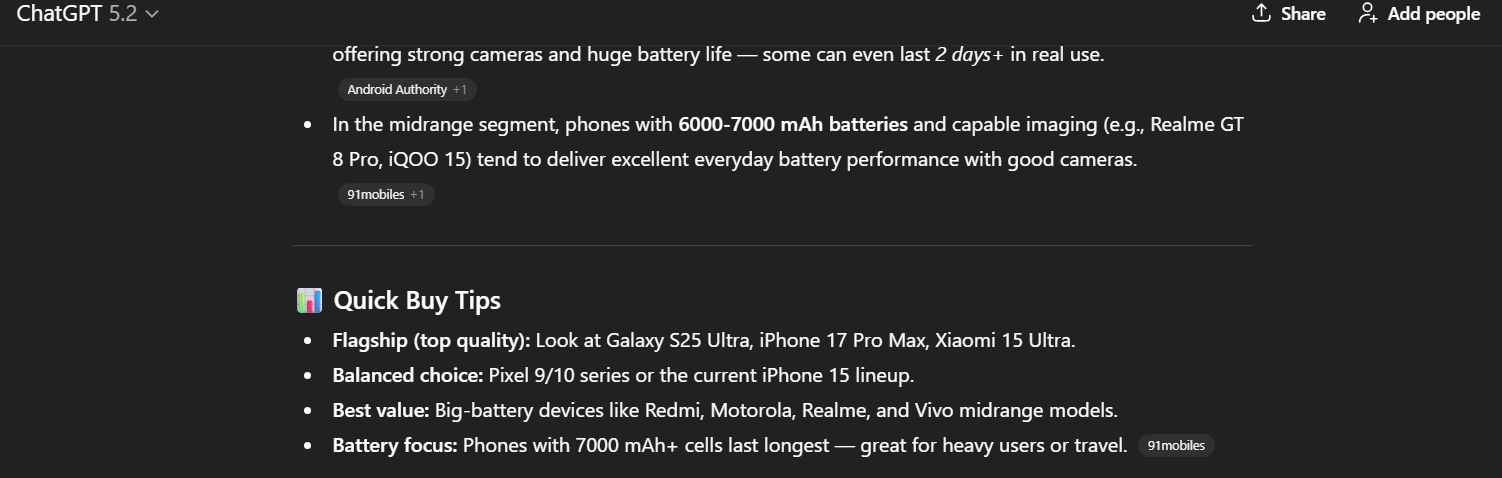
- In other words, instead of wasting hours on research, they type, “phones to buy with a good camera and battery life.”
- The moment AI receives this prompt, it doesn’t search for a phone like us humans.
Instead, it gathers specifications, reviews, pricing, expert opinions, and patterns across sources and provides a concise answer for the user to consider. Something that is known as a synthesis of information. To be honest, it is all fun and games for the user. But for you, it means:
- By the time a user reaches your website (if they do), their opinion is already formed.
- AI has ensured that it has done thorough research and given the best possible alternative.
✅ In short, your fate hangs in the balance, and it all depends on how AI perceives your content.
This is what changes the fact of who you are really speaking to when you shape or mentally map your customer’s journey.
The Real Shift: From Search → Synthesis → Selection
You might have heard it a million times now that AI is changing search. Especially when it comes to the Google AI Overviews. But this is something entirely different from searching on Google, yet all the information is sourced from it.
Think about AI as a gatekeeper, but in a good way. It ensures that you get exactly what you want without even opening a single tab. The new sales funnel is a bit different than what we are used to.
> You want to buy a phone > you go to your trusted AI assistant (ChatGPT, Claude, Gemini, etc) > AI synthesizes the answer > shortlists the top alternatives. This is accurately what a research study conducted by the Pew Research Center elaborates on. It says “26% of users ended their session entirely after seeing an AI overview.”
Now, from a business perspective, it means:
- Your content should be ready and structured enough to be quoted by AI overviews.
- It should also be a part of the AI synthesis.
More than anything else, you have to understand the fact that AI doesn't do comparisons or rank the top five tools. It directly gives you the conclusion and accordingly influences your user decision. Ahrefs has made it more intense with its research that says "AI Overviews reduce clicks by roughly 34.5 % overall, meaning the traditional funnel is collapsing before a click happens."
When it comes to AI in the decision-making phase, this is what you are competing with :
A high-end intelligent tool now makes the decision for your users. It determines the fate of your entire product line simply by scanning your content. You get one shot, and that’s it. The stakes are higher than ever, but so is the opportunity and exposure.
See, here is the thing: all we talk about is how AI is taking over core user experience, it is manipulating our users, and so on. To begin with, these complaints only push us away from our main focus!
Have you ever wondered how your credibility will skyrocket if a tool like ChatGPT or Gemini recommends your name to its millions of users? Now you might think, all this sounds great but is it even a possibility?
Yes, I know you have mastered the art of dealing with humans and their buying habits and nuances. But a robot? Well, it's also a piece of cake! Here’s how:
How AI Agents Actually Decide Whether You Can Be Recommended
Most people confuse AI with their customers themselves and eventually start relying on straightforward robotic content, hoping to make a mark. But this is not exactly where the dynamic shift happens.
There are three critical things that are at play here:
- AI is not your customer, but more like an evaluator that scans your content for your real user.
- You still need to write personalized, accurate, and meaningful content to even feature as AI’s recommendation.
- AI doesn’t like, dislike, prefer, or discriminate against your brand. It is a machine that runs on algorithms; all it understands are clearly defined patterns.
So, if you wish to crack the code, here are a few quick things that you need to keep in mind:
How Clearly Your Product Can Be Explained Without Interpretation
AI doesn’t understand the satisfaction or anticipation of buying a new phone. It can’t be persuaded by saying things like “game-changing zoom output.” Instead, it relies on direct cues and hints to understand the credibility of your product, for example, “Take the perfect selfie for your Instagram even with rapid movements.”
- Infact, this is where most businesses lose visibility because the moment you rely on vague positioning, AI ends up interpreting a product on its own. And this is where the problem begins. Here is a quick example:
❌ “A revolutionary smartphone camera experience.”
✅ “A 50MP camera designed for low-light and motion photography.”
- AI is always on the lookout for: who the content is for, what it does, and where it fits. Along with that, you have to remember that AI agents don’t reward exciting language. They reward language that is understandable and explained easily.
In fact, this is where we, as HumanizeAI.io, can also help. Since the core of this discussion is something we have been doing for quite a while now: to write content like humans.
With our AI humanizer, you can refine robotic content and ensure it's easy to read, digestible, and, most importantly, acknowledged by AI. With more than 7 billion users, we know what needs to be done. Moreover, don’t forget we have a set of writing tools as well!
How Consistent You Are Across the Internet
AI has now become way smarter; it doesn’t read your isolated claim of being the best without a few checks. It does a thorough review of your overall setup and then only forms an opinion. For example, it will cross-check your:
- Your homepage and pricing page
- Product documentation
- Reviews and testimonials
- Comparison articles
- Community discussions and so on.
Now, if your messaging keeps changing across platforms, AI becomes unsure about your product, and you miss out. Consider an example: your website claims that your tool is ‘easy to set up and beginner-friendly.’ However, your reviews say “powerful but complicated.” For AI, this becomes a contradiction, and things backfire.
But before we move on to the next section, you must be wondering, what about the brands that do not have significant reviews?
Here’s the important part: AI doesn’t penalize small brands for having fewer signals. It penalizes them for misleading users (once again) for having contradictory signals.
Or, to put it in simple terms, a small brand with ten dedicated signals is far more appreciated by AI as compared to a big brand with fifty contradictory ones.
How Honest You Are About Your Product
AI doesn’t like figuring out the truth by itself; instead, it wants you to be open and upfront about it. Firstly, when AI checks your product for real-time recommendations, it prefers real-world boundaries or settings. Put simply, it checks for:
- Who your product is best for
- Who might not prefer it
- Who can struggle with it
You have to understand this point from AI’s perspective and its reputation. It is designed to avoid recommending something that could disappoint a user. Therefore, all it wants is a clear picture before making any final call or decision.
For example:
❌ “A great tool that is perfect for all teams and sizes.”
Or, going back to our earlier example, “the best phone for every Android user!”
✅ “Best suited for content creators and everyday users who want great camera quality and dedicated battery life.”
This is not about making your product sound weaker or less preferred. Instead, make the recommendation safer and more credible for the niche audience.
How You Live Up to Your Trust Signal Claims
Writing a blog and saying you have the best product doesn’t work for AI. It is a very sceptical setup that questions everything every step of the way. This is why you need to be ready with your receipts and convince AI that you are telling the truth.
For example:
❌ Writing “long-lasting battery life’ is not going to impress AI even for a second. It needs more input or clarity. What it needs is a backup to build your case, or in other words:
✅ “Up to 18 hours of video playback on a single charge.”
If you put this on a simple checklist, it includes the very basics like:
- Specific features that guarantee outcomes
- Dedicated numbers, limits, or ranges
- Hands-on real examples of usage
- Clear documentation
So, Who Are You Really Designing the Journey For?
Forget about all those irrelevant LinkedIn posts, SEO guides, and blogs that say AI is a menace. Let go of the obvious rage-baiting fear that SEO is dead and your content is no longer relevant. Take a deep breath and think about this entire scenario for a while.
It is one of the best times to be a marketer! Think about it this way: you can reach thousands of people without spending a single penny. All it takes is knowing what you want and who you're doing this entire thing for!
At the end of the day, this isn’t a story about robots replacing customers or AI taking over marketing. But, using AI as the much-needed filter to make sure you reach out to genuine users who are fatigued, tired, and want immediate solutions.
The best part? You get to do all this by being more authentic, human, and consistent with clarity. So that at the end of the day, it doesn’t really matter where your customer comes from.