
A major chunk of big online businesses and brands are now in a state of constant panic as AI is reshaping how we search. The blue links have now become quick summaries and AI-generated answers. Users no longer care to click or look for links, as everything they want is in a ready-made summary.
The results? More dependency on zero-click searches, less organic traffic, but most importantly, a shift in our priorities. We now are confused about how to not only rank but also get cited by our favorite AI tools.
But what does all this mean for you as a business? Especially if you are starting now? Or, are you one of those businesses that are now struggling to keep up with their previous glory of being preferred by Google? Don’t worry, it is all fixable.
SEO is not dying; the way we search is changing, and that is why it is evolving to keep up. Read along as we explain what is happening and how you can be part of this growing trend as well.
What Is The Panic About?
The usual SEO and ranking guidelines were simple. You write your content, optimize your website, and Google pushes it further. It was a simple chain of events that focused on pushing content that is accurate and caters to the search intent.
But with AI in the picture, things have now changed. Users no longer browse through the top-ranking websites for their query. They get it all ready-made in one optimized summary. This is what it looks like:
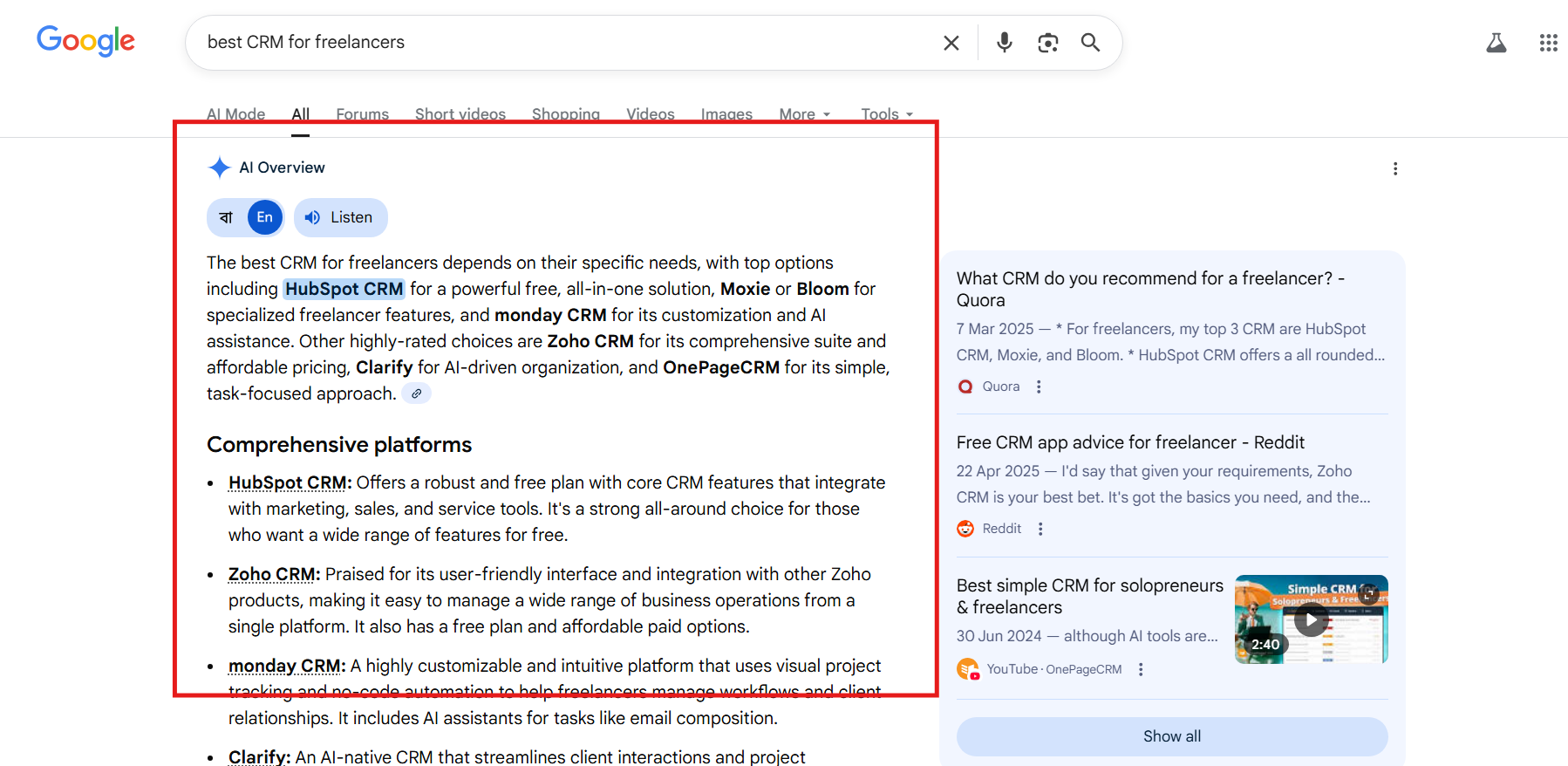
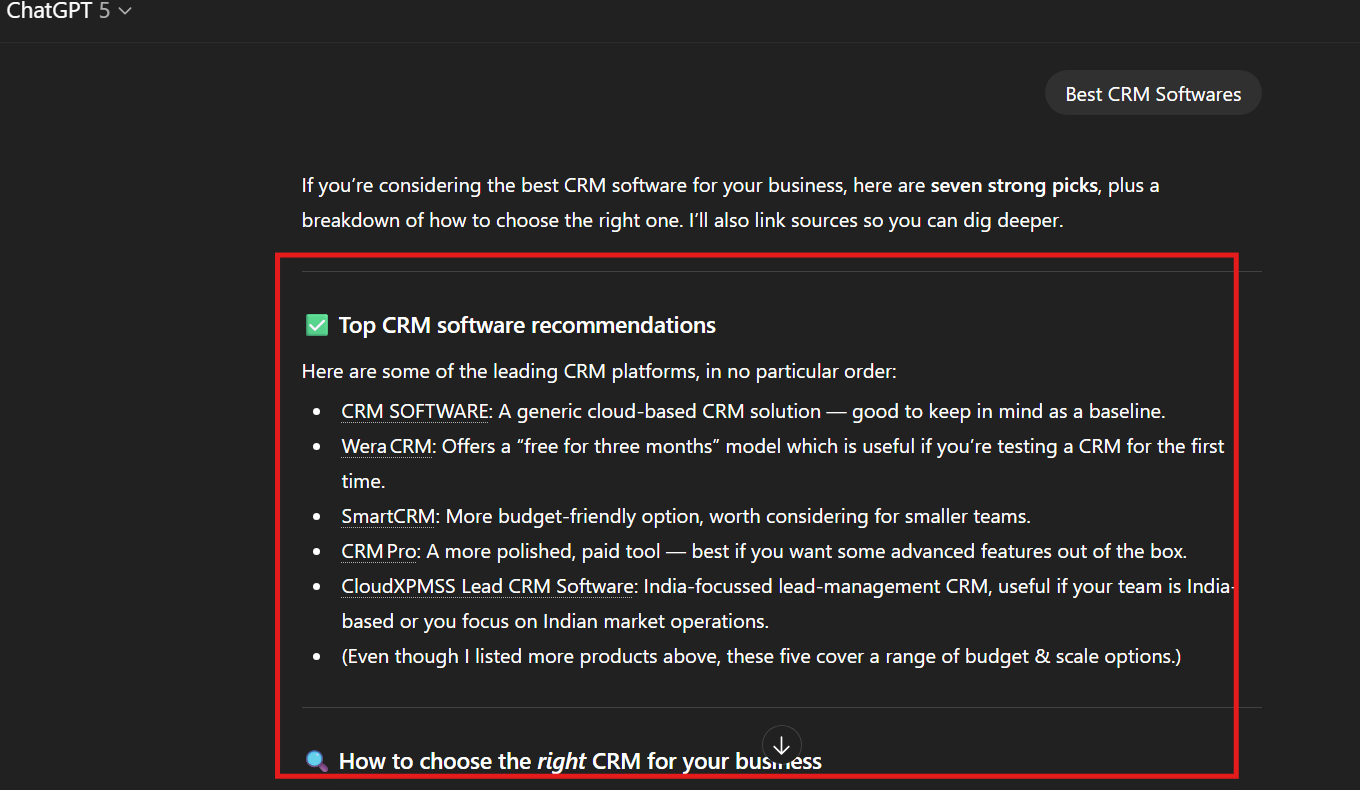
As you can see, the pattern has now changed significantly. Even before you scroll to the intended link, the ready-made summary distracts you. Hence, in most of the cases, you do not even scroll further to resolve your query. You get it all done in one single overview!
Initially, it was: User types query > Google lists 10 blue links > user clicks one > website gets traffic.
But with AI: User types a query > AI reads dozens of sources > generates a summary > user gets the answers, contexts and more in a second.
However, there is also another layer to this story. We are also resorting to popular tools like Gemini, ChatGPT, or Claude to do our searches for us. Hence, your blog, content, or post might just direct AI on how to answer a question without you getting a single visit.
Now, this entire situation has changed our content dynamic. Therefore, this apparent panic or anticipation is not an assumption but a real-time backlog. This is what it looks like:
- Businesses are now losing clicks even if they rank well with an AI overview.
- AI tools like Gemini, ChatGPT, or Claude summarize what you write without driving the traffic your way.
- Our search intent is no longer a keyword but a full conversation, and we need to focus more on context-rich, conversational prompts.
- There is no stable data for us to understand what is happening, as AI results are dynamic and keep shifting.
- We are moving towards AEO or answer-generated optimization that focuses not only on ranking but answering the query at hand.
Anne Smarty has recently summed it up in the simplest way possible: the future is all about being trustworthy, credible, and authoritative. We have to go beyond keywords as AI is now filtering for expertise, authority, and experience. But how relevant is all this?
The Numbers Don’t Lie: Businesses Are Already Losing Visibility
One might think that it is too early to discuss all this, and AI is yet to evolve, might be in for a shocker. A recent study by Ahrefs analyzed 300,000 keywords and showed that “the presence of an AI Overview in the search results correlated with a 34.5% lower average click-through rate.”
| Or in simpler terms, even if you rank on the first page, many people will actually visit your website. As they are getting what they need in the AI Summary without having to go through an intense browsing session. |
For you, it means the competition has now gone beyond you vs. the other websites. It now has an added layer of AI between you and your readers as you try to present your content like you were doing all these years.
A study by Business Wire on how B2B buyers find content gives us some interesting context in this regard. It systematically points out that AI-native platforms like ChatGPT and Perplexity are outperforming organic search, email marketing, and paid media for lead generation.
Not only that, but AI search is now the second-largest driver of qualified leads for B2B firms: a whopping 34%, right behind social media (46%).
These numbers at this point make you wonder one simple thing: what exactly is AI doing that’s reshaping the rules of SEO? AI was only supposed to help us write, reshape our content, and so on, but how is it now making such huge changes in our entire operation?
How AI Is Rewriting the Rules of Search Visibility
You know there is a drastic shift happening when you realize we are now moving past “googling” things. For every query, we now run towards ChatGPT or Gemini instead of browsing through links. The reason? It is easier, faster, and more convenient.
But the moment we step into the business role, this very thing becomes our biggest hurdle. With AI-driven search experiences like Google’s AI Overviews, Microsoft’s Copilot, and platforms such as Perplexity and ChatGPT Search, things have now gone beyond a simple keyword.
🚨 We are now leaning towards a more realistic solution that will make sure we are also being referenced by AI searches. So, instead of just being in the good books of Google, we are now also rallying for AI’s attention.
However, AI works differently from Google, and this is where we seem to struggle the most. AI doesn’t just crawl websites; it reads, interprets, and summarizes. It can blend your insights with those from hundreds of other sources and serve the result as a single, polished response. Or, your original post might train an AI model how to answer a particular question without you even getting a single visit.
- So you have the Google search, where users compete for clicks and rankings with your original content.
- The AI search world where your writing credibility, authenticity, and research decide everything.
How Businesses Can Stay Visible in the Age of AI Search
We now know that there is a problem in our hands. But we need a solution, and soon. To begin with, you must understand that AI is not a service, but a product designed to cater to its users’ needs. Therefore, it will only vouch for or promote content that is authentic, original, and comes from a place of expertise. Yes, the same as Google’s People-First Policy.
How does this affect you as a business? It is quite simple, actually. You have to base your entire content on search intent as compared to trending keywords. Or, to elaborate it in simple terms:
The gradual shift from keyword to question
You are no longer chasing a single keyword but an actual question, and therefore your content strategy needs to change. So, instead of relying on “best AI tools” you have to gradually shift your focus to” the best AI tools that will help me write like a human” and so on.
Prioritize Authority Over Volume
Thankfully, a few of the rules remain the same for AI discoverability and Google’s ranking. With ChatGPT, Gemini, and others, you also need to rely on your expertise and reflect it in your content. It doesn’t really matter how many posts you put up in a day, but it's the quality that determines the fate. So, when you talk about “best CRM software,” instead of relying on multiple blogs, you must rely on used studies, hands-on experiences, and so on.
Structure Content for AI Discovery
If you read Google’s directive on how you should structure your content for its AI search experience, you will realize one thing: it is the same for other AI tools as well. Or, in simpler and quicker terms, you must guide the AI crawler accordingly through your content. The proper H2s, bullet points, visibility, and privacy control all matter. You have to remember that AI doesn’t understand context or emotions; all it does is track patterns, keywords, and structures, and you need to come prepared.
Rely On New Visibility Metrics
The golden metric of clicks no longer exists. Today, our search visibility extends beyond one simple rigid parameter. It now has evolved into knowing if your content is seen, read, and even quoted inside AI-generated summaries. So instead of chasing click-through rates alone, businesses now need to track AI visibility metrics like Zero-click impressions, Citations, AEO results, and so on.
Balance Between Human Storytelling and Machine Readability
Lastly and most importantly, you must remember one critical thing: AI-generated results will never consist of AI-generated answers. This is where the whole thing becomes more interesting and ironic at the same time.
Think about it this way: AI has a certain reputation to maintain. It just can’t give random AI-generated answers to its users. So, the more authentic, relatable, and experience-oriented your content is, you win the game.
Even if you rely on AI for research, you must add human touches to your content to appease the AI algorithm gods. This way, you also get to be on Google’s good books without much effort or hassle.
The Future: SEO Isn’t Dead, It’s Getting Smarter
You need to understand that AI is not taking over SEO. No matter what one says, SEO is always going to be your champion. However, it is necessary to acknowledge that it is now evolving. This gradual shift clearly shows how much we now rely on AI in our daily lives, and it is time to make SEO a part of it as well.
Brands that understand this are always going to have an upper hand compared to those that are still waiting for the right time. To begin with, we must acknowledge that the era of visibility won’t depend on who publishes the most content, but on who provides the most trusted answers.
Google’s AI, ChatGPT, and other generative engines are all looking for one thing: authentic voices that deliver verifiable value.
At this point, your job as a business is solely about making the algorithm trust you as you structure your content and also add a touch of expertise and authority.
Don’t forget, even AI will also choose the answer that is human, original, and authentic!